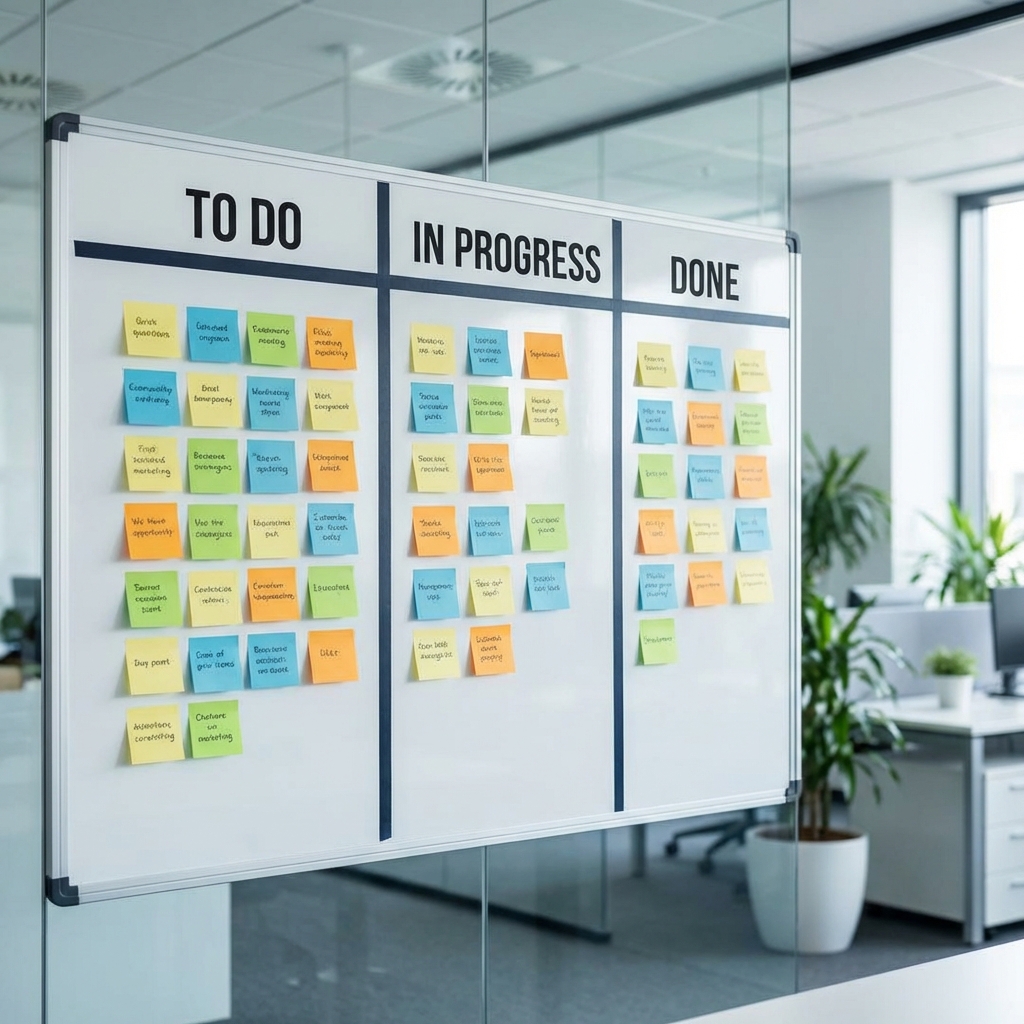
Effective project management is often the difference between small businesses that consistently deliver results and
those that struggle with missed deadlines, budget overruns, and team frustration. While large corporations can
afford dedicated project management offices and specialized software suites, small business owners frequently find
themselves managing projects alongside their many other responsibilities. The challenge lies not in understanding
the importance of project management, but in implementing practical approaches that work within the resource
constraints typical of smaller organizations.
For small business owners, project management encompasses far more than tracking tasks and deadlines. It involves
aligning every project with broader business objectives, making strategic decisions about resource allocation,
maintaining clear communication with limited staff, and adapting quickly when circumstances change. The best
practices in this field have evolved significantly, incorporating lessons from both traditional methodologies and
modern agile approaches to create flexible frameworks suitable for smaller teams.
This educational guide explores proven project management principles adapted specifically for small business
environments. From initial project planning through execution and review, each phase presents unique opportunities
and challenges that small business owners can navigate more effectively with the right knowledge and frameworks in
place.
Why Project Management Matters for Small Businesses
Small businesses operate with tighter margins, fewer resources, and less room for error than their larger
counterparts. A single poorly managed project can consume disproportionate time and resources, potentially affecting
the entire business. Understanding why structured project management matters — and how it differs in a small
business context — provides the foundation for implementing effective practices.
The Cost of Poor Project Management
Research from project management organizations consistently shows that projects without structured management
approaches are significantly more likely to exceed budgets, miss deadlines, and fail to meet stakeholder
expectations. For small businesses, these failures carry amplified consequences. Budget overruns that a large
corporation might absorb without difficulty can threaten the viability of a small business. Missed deadlines can
damage client relationships that represent a significant portion of revenue. And the opportunity cost of team
members spending excessive time on poorly managed projects means other critical business functions receive
insufficient attention.
Consider a small marketing agency managing a client website redesign. Without proper project management, scope creep
gradually expands the project beyond initial parameters. The designer incorporates additional features the client
mentions casually in meetings but never formally approved. The developer begins building before design
specifications are finalized. The project that was estimated at four weeks stretches to eight, consuming resources
originally allocated to other client work. This scenario, common in small businesses, illustrates how structured
management practices protect both profitability and client relationships.
Benefits of Structured Approaches
Small businesses implementing even basic project management practices typically experience improved deadline
adherence, better budget control, clearer team communication, enhanced client satisfaction, and more predictable
resource utilization. These improvements compound over time as teams develop stronger project habits and leadership
gains better visibility into operational capacity. Perhaps most importantly, structured project management creates
institutional knowledge that persists even as team members change roles or new employees join the organization.
Essential Planning Practices Before Project Kickoff
The planning phase determines the trajectory of every project. Investing adequate time in planning consistently saves
multiples of that time during execution. For small business owners juggling multiple priorities, the temptation to
rush planning and begin execution immediately is understandable but counterproductive.
Defining Clear Scope and Objectives
Every project should begin with a clearly documented scope statement that answers fundamental questions: What will
this project produce or achieve? What specific deliverables are expected? What falls outside the project boundaries?
Who are the stakeholders, and what are their expectations? Without clear scope definition, projects are vulnerable
to scope creep — the gradual expansion of requirements that extends timelines and budgets beyond original estimates.
A practical approach for small businesses involves creating a one-page project charter that captures the project
purpose, specific deliverables, success criteria, timeline, budget constraints, and key stakeholders. This document
serves as a reference point throughout the project and provides a basis for evaluating change requests. When someone
suggests adding features or expanding requirements, the team can evaluate the request against the original charter
and make informed decisions about whether to incorporate the change, understanding the impact on timeline and
resources.
Breaking Projects into Manageable Work Packages
Large, complex projects become manageable when decomposed into smaller, clearly defined work packages. The Work
Breakdown Structure (WBS) is a foundational project management tool that organizes work into hierarchical levels,
moving from broad project phases down to specific tasks that individual team members can own and complete.
For a small business launching a new product, the WBS might begin with major phases like Market Research, Product
Development, Marketing Preparation, and Launch Execution. Each phase then breaks down into specific activities:
Market Research might include Competitor Analysis, Customer Survey Design, Survey Distribution, Data Analysis, and
Findings Report. This decomposition makes it possible to estimate time and resources for each component, identify
dependencies between tasks, and assign clear responsibility for every element of the project.
Realistic Time and Resource Estimation
One of the most common project management failures in small businesses is underestimating the time required for
tasks. This typically results from optimism bias — the tendency to estimate based on best-case scenarios rather than
realistic expectations. Experienced project managers use several techniques to improve estimation accuracy.
| Estimation Technique | How It Works | Best Used When |
|---|---|---|
| Three-Point Estimation | Average of optimistic, realistic, and pessimistic estimates |
Tasks with significant uncertainty |
| Analogous Estimation | Based on actual time from similar past projects | Recurring or similar projects |
| Bottom-Up Estimation | Estimate each task individually, then aggregate | Well-defined project scopes |
| Expert Judgment | Combine experience from team members who’ve done similar work |
Specialized or technical projects |
Adding buffer time — typically 15 to 25 percent beyond initial estimates — accounts for inevitable interruptions,
revisions, and unforeseen complications that small business environments frequently present. This buffer isn’t
padding; it’s realistic planning based on the understanding that unexpected demands on team time are a constant in
small business operations.
Execution Best Practices for Small Teams
Once planning is complete, executing effectively requires disciplined communication, proactive problem-solving, and
the flexibility to adapt without losing sight of project objectives. Small teams often have advantages during
execution — shorter communication chains, faster decision-making, and greater individual ownership — but only when
these advantages are consciously leveraged.
Daily and Weekly Communication Rhythms
Establishing consistent communication rhythms prevents the information gaps that derail projects. For small business
teams, a brief daily standup meeting of 10 to 15 minutes keeps everyone aligned on priorities and surfaces potential
issues before they become problems. Weekly project review meetings provide the opportunity for more comprehensive
progress assessment, risk evaluation, and planning adjustments.
The key is keeping these communications focused and actionable. Each team member should address three questions in
daily standups: What did I accomplish since last update? What am I working on next? Are there any obstacles or
concerns? This structure maintains accountability while minimizing meeting time — a critical consideration for small
teams where every hour carries significant value.
Managing Dependencies and Bottlenecks
In small teams, individual team members often represent single points of failure for specific capabilities. If the
only person who can handle graphic design becomes unavailable, entire project timelines can shift. Identifying these
dependencies early allows for proactive mitigation: cross-training team members on critical skills, establishing
relationships with freelancers who can provide backup capacity, or sequencing project tasks to minimize the impact
of individual availability constraints.
Bottlenecks — points where work accumulates faster than it can be processed — require different management
approaches. Common bottlenecks in small businesses include approval processes that depend on the business owner,
quality review steps that only one team member can perform, and resource constraints that limit parallel work
execution. Addressing bottlenecks often involves delegating approval authority, creating standardized review
checklists that enable broader participation, or adjusting project schedules to smooth workflow.
Change Management Without Bureaucracy
Changes during project execution are inevitable. Client requirements evolve, market conditions shift, and new
information emerges that affects project parameters. Small businesses need change management processes that are
structured enough to prevent uncontrolled scope expansion but lightweight enough to avoid creating bureaucratic
obstacles to necessary adaptations.
A practical approach involves establishing a simple change request process: document the proposed change, assess its
impact on timeline, budget, and resources, obtain stakeholder approval, and update the project plan accordingly.
This process can be as informal as a structured conversation followed by an email confirmation, but the discipline
of consistently evaluating change impacts before implementing them protects projects from gradual deterioration.
Tools and Systems for Small Business Project Management
The project management tool market offers hundreds of options at various price points and complexity levels. For
small businesses, the best tool is one that the team will actually use consistently. An overly complex system that
team members avoid is far less effective than a simple approach that becomes embedded in daily workflows.
Choosing the Right Level of Complexity
Small businesses with teams of two to five people often find that simple task management tools provide sufficient
structure without overwhelming overhead. Tools offering basic task lists, assignment capabilities, deadline
tracking, and simple status indicators serve many small business needs effectively. As teams grow and projects
become more complex, upgrading to tools with more sophisticated features like Gantt charts, resource allocation
views, and automated reporting becomes worthwhile.
Many small business owners begin with familiar tools — spreadsheets, shared documents, or email — and these can work
adequately for simple projects. However, as the number of concurrent projects or team members increases,
purpose-built project management tools provide significant advantages in visibility, accountability, and
coordination that generic tools cannot match.
Integrating Project Management with Business Operations
Project management doesn’t exist in isolation from other business functions. The most effective small business
project management approaches integrate with existing operational workflows, financial tracking, and communication
systems. Look for tools that connect with your calendar application, email client, and accounting software to
minimize duplicate data entry and maintain a unified view of business operations.
Monitoring Progress and Managing Risks
Tracking project progress requires both quantitative metrics and qualitative assessment. Numbers tell part of the
story — task completion rates, budget expenditure, and timeline adherence provide objective measures. But they must
be interpreted within context, considering team morale, quality of deliverables, stakeholder satisfaction, and
emerging risks that haven’t yet impacted measurable outcomes.
Key Performance Indicators for Project Health
Small business project managers should monitor several core indicators: schedule performance (are milestones being
met on time?), budget performance (is spending aligned with projections?), scope performance (is the project
delivering what was planned?), and quality performance (do deliverables meet defined standards?). A simple
red-yellow-green status system for each indicator provides quick visibility into project health without requiring
complex earned value calculations that larger organizations might employ.
Proactive Risk Management
Identifying potential problems before they materialize is far less costly than responding to crises. At the beginning
of each project, conduct a brief risk brainstorming session with the team. For each identified risk, assess its
probability and potential impact, then determine whether to accept, mitigate, transfer, or avoid it. Review the risk
register during weekly project meetings, updating as new risks emerge and existing risks evolve.
Learning from Completed Projects
One of the most valuable yet frequently neglected project management practices is the post-project review. Also
called retrospectives or lessons-learned sessions, these structured reviews examine what worked well, what could be
improved, and what specific changes should be implemented for future projects. Small businesses that consistently
conduct post-project reviews develop institutional knowledge that progressively improves project performance over
time.
Conducting Effective Retrospectives
Keep retrospectives focused and forward-looking. Allocate 30 to 60 minutes depending on project complexity. Structure
the discussion around three questions: What went well that we should continue doing? What didn’t go well that we
need to change? What specific actions will we take to improve our next project? Document the outcomes and assign
responsibility for implementing agreed-upon improvements. Without documented action items, retrospective insights
rarely translate into actual changes.
Building a Project Knowledge Base
Over time, documenting project outcomes, estimation accuracy, common risk factors, and effective approaches creates a
valuable knowledge base. This repository helps with estimating future projects more accurately, onboarding new team
members, identifying recurring problems that need systemic solutions, and demonstrating organizational maturity to
clients and partners. Even simple documentation — a shared folder of project summaries and lessons learned —
provides significant value when referenced during future project planning.
Conclusion
Project management for small businesses doesn’t require complex methodologies or expensive software solutions. It
requires disciplined planning, consistent communication, realistic estimation, and a commitment to continuous
improvement. The best practices outlined in this guide provide a framework that can be adapted to virtually any
small business environment, regardless of industry or team size.
Start with the fundamentals: define clear scope and objectives, break work into manageable packages, establish
communication rhythms, track progress against plan, and learn from every project. As these practices become
habitual, they create a foundation for managing increasingly complex projects with confidence. The investment in
developing project management capabilities pays dividends through improved efficiency, stronger client
relationships, and more predictable business outcomes.
Small business owners who develop strong project management skills position their organizations for sustainable
growth. The ability to consistently deliver projects on time, within budget, and at expected quality levels builds
the reputation and operational capability that distinguish thriving small businesses from those that struggle with
execution. Begin implementing these practices incrementally, and the cumulative improvements will become evident
over time.
For more insights on business operations, explore our educational guides on streamlining
business operations for efficiency and building and leading
high-performance teams.
Important: This information is provided for educational purposes only. We are not financial
advisors, and this content should not be considered professional financial advice. Always consult with qualified
professionals regarding your specific business situation.